when life has other plans for you
In 2010, David Fajgenbaum had the life that many people dream of.
He was young, strong, and bright. He had played quarterback on a Division I college team. He spoke several languages. He was a junior at one of the best medical schools in the United States: the University of Pennsylvania.
His future seemed wide open.
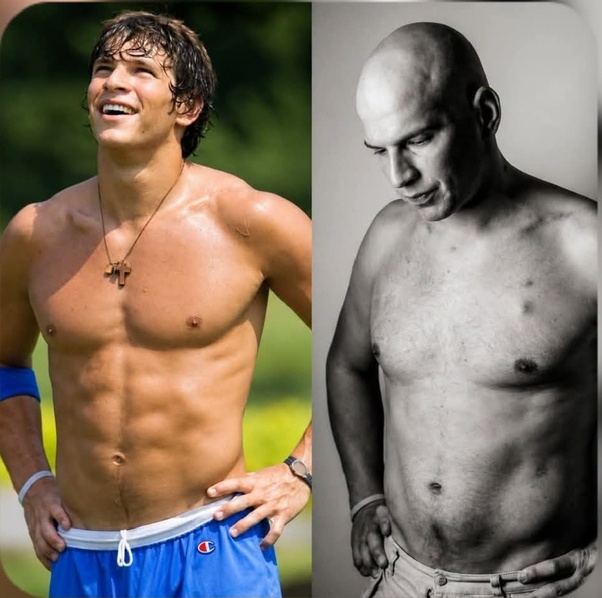
Career.
Medicine.
Success.
A life that was just beginning.
And then his own body declared war on him.
Almost overnight, everything changed.
His lymph nodes became swollen.
Their forces disappeared.
His organs began to fail.
His body seemed to have lost control.
David was rushed to the hospital. Tests, scans, blood work, and weeks of uncertainty followed.
Finally, the doctors gave him a name:
Castleman disease.
A rare and dangerous disease in which the immune system can become so overactive that it begins to damage the body's own organs.
Treatment options were limited.
The guarantees are almost nonexistent.
A priest entered his hospital room to administer the last rites.
David said goodbye to his family.
He was just over twenty years old.
The age when most people plan trips, careers, love, and the future.
He was lying in a hospital bed, preparing to die.
And yet, intensive chemotherapy pulled him back from the brink.
But not for long.
The disease returned.
Once.
And another one.
And another one.
During the following years, David was on the brink of death five times. Five times, chemotherapy bought him a little more time.
After another relapse, the doctors told him the words no patient wants to hear: his body had already received the maximum dose of chemotherapy that a human being can safely withstand.
If the disease returned again, there would be almost no options left.
Most people, faced with that, would start saying their goodbyes.
David opened medical journals.
Between treatments, from his hospital bed, he began to do something almost unimaginable: to study his own terminal illness as a patient and as a doctor-scientist at the same time.
He read thousands of pages of his medical history.
He analyzed his own results.
He looked for patterns where others only saw chaos.
Because sometimes the person who is drowning sees the current differently than the person standing on the shore.
And he found a clue.
In their tissues, a biological pathway called mTOR was unusually active: a mechanism that could be fueling the dangerous overreaction of their immune system.
David asked himself a simple, yet revolutionary question:
What if a drug already existed that could stop it?
He started searching.
And he found sirolimus , a drug that was already being used in transplant patients to help prevent organ rejection.
At that time it was not used for Castleman disease.
But, biologically, it fit almost perfectly with the mechanism that David had discovered in his own body.
Under strict medical supervision, he began taking it.
And something extraordinary happened.
The symptoms began to disappear.
Not just to improve.
To disappear.
The man, who had almost run out of options, left the hospital.
David finished his medical degree.
He married his partner, Caitlin.
He became a father.
He became a professor at Penn Medicine.
And he transformed his personal battle into a mission for thousands more people.
He founded the Castleman Disease Collaborative Network, a global network of researchers, doctors, and patients created to provide care and accelerate advances in a disease that had been ignored for years.
Later, he co-founded Every Cure, an organization that uses artificial intelligence to find new uses for existing drugs.
The idea is simple, but powerful: there are thousands of approved drugs in the world.
And thousands of diseases that still do not have an effective treatment.
Perhaps some answers already exist.
Perhaps the medicine is already on a shelf. ( Like AZT )
It simply hasn't been connected to the correct diagnosis yet.
Once, a priest entered David's room because everyone thought the end was near.
Today, David publishes scientific papers, helps patients, and continues to take a small sirolimus pill every day : the drug he helped identify during the darkest period of his life.
This is not a story about self-medication.
It is not an invitation for anyone to self-prescribe medication.
It's a story about something deeper.
Hope is not passively waiting for a miracle.
Sometimes hope is like a person who can barely breathe, but keeps reading a scientific article.
Hope is action.
Investigation.
Questions.
Equipment.
Faith backed by work.
David Fajgenbaum didn't just wait for someone to save him.
He became the person who began to look for a path.
And he found it.
Not just for himself.
Also for those who are still lying in hospital rooms, waiting for someone, somewhere in the world, to refuse to give up.
---------------------------------------

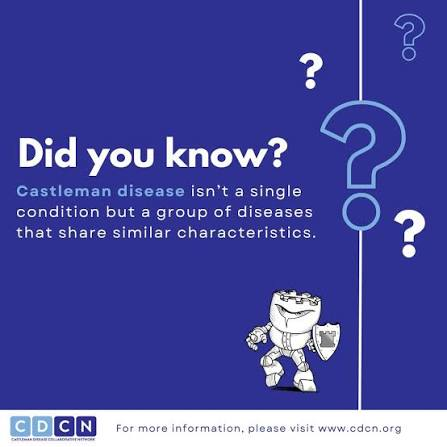
Castleman disease is a rare group of immune system disorders causing enlarged lymph nodes and tissue changes. It has two main forms: unicentric (affecting a single lymph node area, often with no symptoms) and multicentric (affecting multiple lymph node areas and causing systemic inflammation).
Types and Causes
Unicentric Castleman Disease (UCD): Affects one lymph node or region; the exact cause is usually unknown.
Multicentric Castleman Disease (MCD): Affects multiple lymph node regions and internal organs.
HHV-8-associated MCD: Driven by human herpesvirus 8, frequently seen in people with HIV.
Idiopathic MCD (iMCD): The cause is unknown, involving an overproduction of an inflammatory protein called interleukin-6 (IL-6).
Common Symptoms
Unicentric: Usually painless; symptoms occur only if the single enlarged node presses on nearby organs or airways.
Multicentric: Fever, night sweats, fatigue, and weight loss.
Advanced Multicentric: Swelling from fluid buildup (anasarca), enlarged liver or spleen, and low blood cell counts.
Diagnosis and Treatment
Diagnosis: Requires a lymph node tissue biopsy, blood tests, and imaging scans (like CT or PET).
Unicentric Treatment: Surgical removal of the single enlarged lymph node is typically curative.
Multicentric Treatment: Uses targeted biologic medications (like anti-IL-6 therapy), antiviral drugs, or chemotherapy depending on the underlying driver.
---------------------------------------
John Bellamy Adds:

If you are affected by this article or you suffer with symptoms, read all you can about it ' on line' and ALWAYS see a doctor and seek help and assistance from as many medical practioners as you can - and not all those with the standard NHS procedures - as we know that many Alternative medications can and do work without the side effects from chemical medications. NEVER STOP ASKING QUESTIONS - NEVER STOP ASKING QUESTIONS AND ONCE AGAIN - NEVER STOP ASKING QUESTIONS. Do not let anyone 'pass the buck ' - patronise you - pass you off - condescend you or act in any way that is considered unprofessional and thoughtful of you - the patient.
DO NOT FEEL INTIMIDATED BY THE DOCTOR. Think of him as your garbage collector / dustman. He has a job to do. I could not do his job any more than he could do mine. He needs the job as much as I do and he needs my custom - just like any other business, or he is out of a job. PERIOD. Many may think they are God's and many are plainly obnoxious assholes - brilliant and good at their job but an asshole never the less - and NEVER feel less worthy just because he is this ' up himself doctor' and believe me, I have had more than one run in with an arrogant doctor and more than one complaint where procedures were changed - because of my compaint - for the better and I have - once - had the Head of departent state that procedures were changed after the fuss I made about crappy service and how one doctor was sent for re ytraining... so my complaint worked. But no one else said anything , to intimidated. Never be afraid to speak up - keep it low key - honest - polite and never loose your rag as that just feeds them ammunition to have to barred and rather than look at their own bad attitude, they will just bar you.
THE DOCTOR IS NOTHING WITHOUT YOU.
I respet them and they respect me.
You make, and take, from the news that which you wish to see and hear. You observe what you want and comment of things that affect you personally. If you don't like something, do not read it and move on but do not shy away from what IS going on in the world of which - you are a part. World news is so easy to find these days and differing opinions not hard to find. Having an opinion is vital and being a ' don't care' person helps no one. So open your mind - open your heart - open your awareness and ALWAYS be open to new ideas.
copyright © 2026
All rights reserved.
TO BE DELETED FROM OUR SYSTEM
Return this e mail with
PLEASE DELETE OH HANDSOME ONE...
Our mailing address is
Hamilton Hall Hotel
1 Carysfort Road
Bournemouth
Dorset BH14EJ
01202-399227


Comments